
Beyond the Box: How Reducing Packaging Doesn’t Compromise Protection
What happens to furniture before it reaches a room matters more than you might think. From the size of the box to the way a trailer is loaded, smarter packaging decisions can have an impact far beyond the factory floor.
When people think about sustainable furniture, attention usually goes to the product itself: the materials used, how long it lasts, or the certifications behind it. Packaging rarely gets the same attention.
Yet every piece of furniture has to make the journey from the factory floor to its final destination. Along the way, packaging affects material use, shipping efficiency, product protection, and even the amount of waste left behind at the project site.
But smarter packaging means using the right materials, in the right amounts, for the right purpose. And that means a mindful approach for every rung up the sustainability ladder.
Right-Size, Don't Oversize
Bigger boxes don't necessarily mean better protection.
When packaging is oversized, it can introduce unnecessary cardboard, empty space, and material that eventually needs to be handled and discarded. Right-sizing takes a different approach by matching packaging more closely to the furniture it's designed to protect.
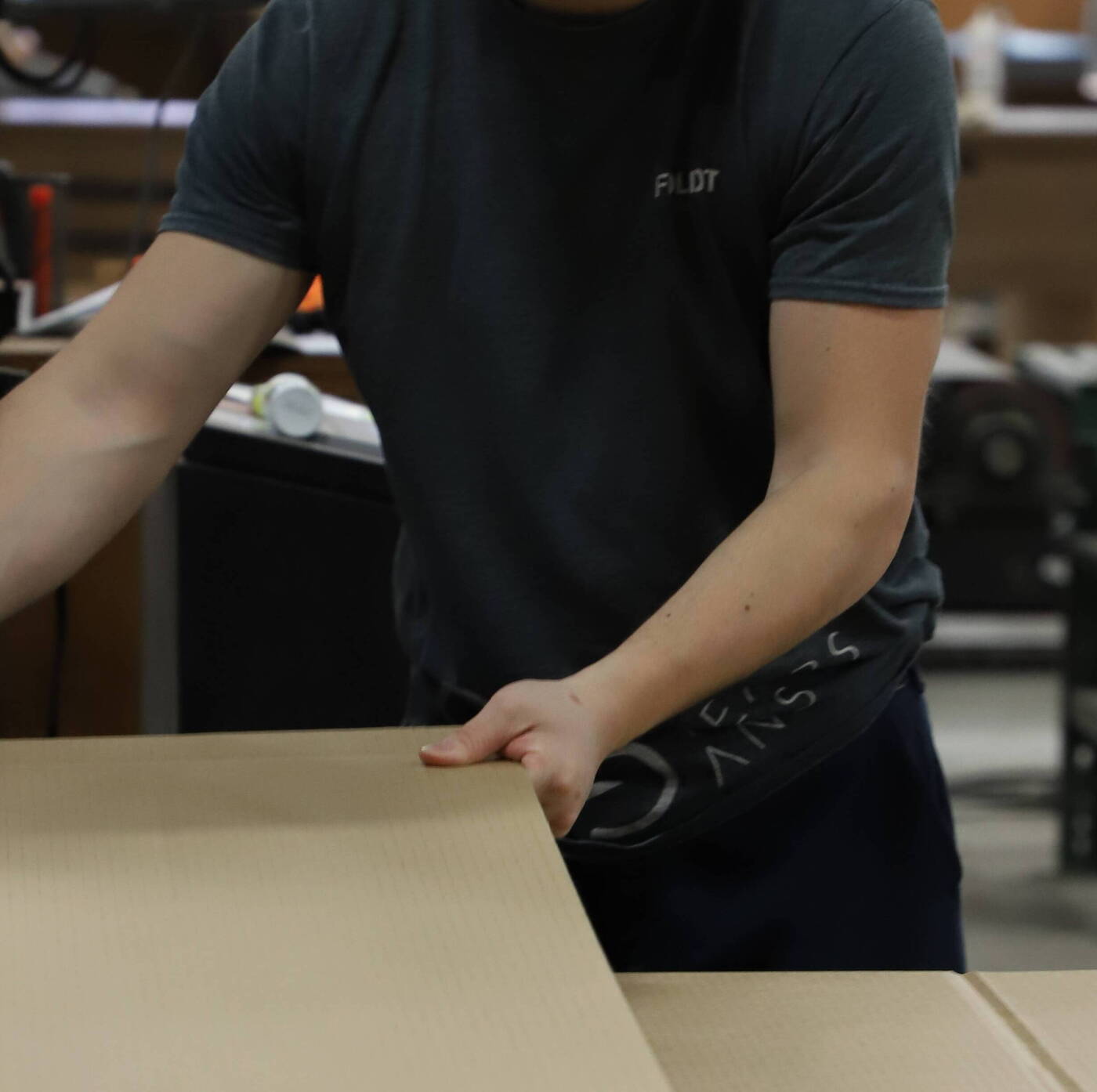
At Foliot, that starts with the materials themselves. We use recycled cardboard and plastic packaging to help reduce our footprint from factory floor to final destination. Custom-made cardboard boxes are right-sized to the furniture where appropriate, helping eliminate excess without compromising the product inside.
Done thoughtfully, right-sizing can mean:
More responsible packaging materials
Less unnecessary material
Less empty space around the product
More efficient handling
Better ergonomics for employees
The principle is simple: choose materials thoughtfully, then use only what the product actually needs.
Protect Intelligently
Of course, reducing material can't come at the expense of protection.
After all, furniture that arrives damaged can require repairs, replacement parts, or even another shipment. Avoiding one type of waste only to create another isn't much of an improvement.
That's why effective packaging is a balancing act.
Standardised wrapping procedures can help determine how much material is needed to protect furniture throughout handling and transportation. Plastic wrap, for example, should be used where it serves a purpose, rather than simply applying more by default.
The objective is not minimal packaging at all costs. It's effective protection without unnecessary excess.
Sustainability and product protection aren't mutually exclusive. Done thoughtfully, they reinforce one another.
Turn Waste Into a Resource
Smarter packaging also means looking beyond what leaves the factory to consider what comes into it.
One example is Styrofoam. Foliot works with suppliers to encourage reductions in the amount used in incoming packaging, helping address unnecessary material before it enters our facilities.
But some Styrofoam still arrives.
Rather than simply treating it as waste, Foliot sends this material to a local supplier that can put it back to use, creating a practical circular-economy solution for a material that would otherwise need to be discarded.
It's a small example of a much larger approach:
Prevent unnecessary material where possible
Reduce what enters the waste stream
Find another use for materials that can't be avoided
Work with suppliers and local partners to improve the process
Sometimes the best waste is the waste you prevent. When prevention isn't possible, the next question should be whether that material can become useful somewhere else.
Do More With Every Shipment
Packaging decisions don't stop creating value once the box is sealed. They can also influence how efficiently furniture moves.
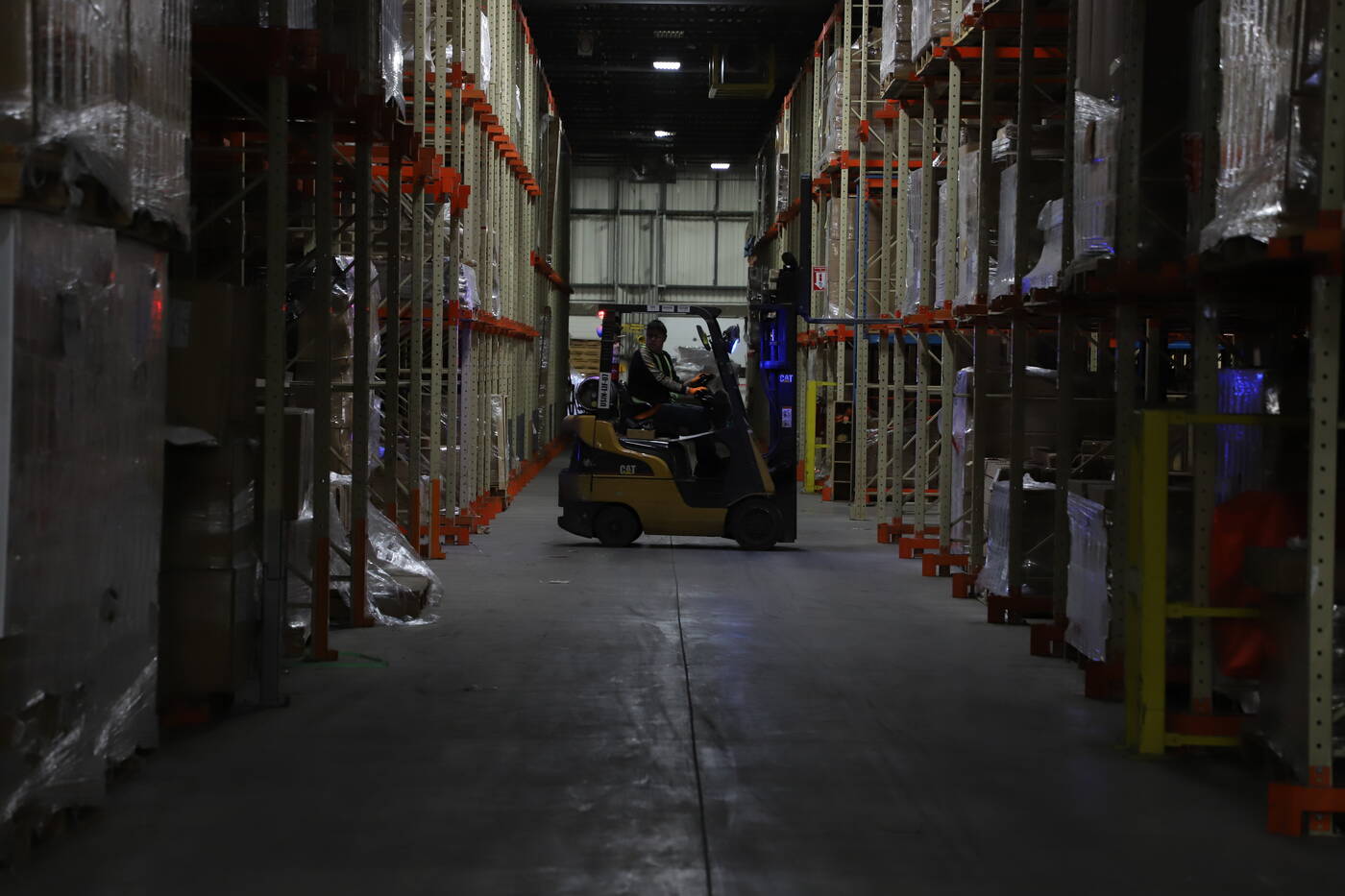
Foliot ships furniture without wooden pallets where appropriate. Removing pallets means they don't occupy valuable space inside the trailer, allowing that capacity to be used for what actually needs to get to the project: furniture.
It also means fewer pallets are left behind for the customer to manage and dispose of after delivery, and trees to cut down to produce them.
Combined with thoughtful trailer-loading strategies, packaging becomes part of a larger logistics question: How can we do more with every shipment?
For large-scale commercial furniture projects, that can mean:
Better use of available trailer space
More furniture moved within each load
Less packaging material arriving at the project site
Less waste for installation teams and clients to manage
These aren't only sustainability considerations. They're operational ones, too.
Never Stop Improving
There is no single perfect packaging solution.
Furniture changes. Materials change. Manufacturing processes evolve. What worked well yesterday may reveal an opportunity for improvement tomorrow.
That's why packaging should be reviewed alongside the products it protects. Manufacturing, product, and logistics teams can identify small adjustments in materials, wrapping, handling, or loading that make the process more efficient.
Individually, those changes may seem minor. Applied across thousands of pieces of furniture and repeated shipments, their impact becomes much more meaningful.
Look Beyond the Furniture
Packaging may be one of the least visible parts of furniture manufacturing, but its impact extends well beyond the box.
Right-sized packaging can eliminate unnecessary material. Thoughtful protection can help furniture arrive as intended. Supplier collaboration can reduce waste upstream. Circular partnerships can give materials another purpose. Smarter loading can make better use of every shipment.
None of these represents one revolutionary sustainability breakthrough.
That's exactly the point.
More responsible manufacturing is often built through practical decisions, repeated, measured, and improved over time.
So, when evaluating furniture suppliers for your next project, consider asking one more question beyond how the furniture is made:
How will it get here?
Because what happens between the factory floor and the finished room matters, too.
To learn more, explore Foliot's sustainability initiatives here.
